Drain and Scupper Roof Leak Repair in Gresham
Follow this season’s water clues from drain opening to roof connection, then consider how the repair can be checked.
Roof drain and scupper leaks are repaired by restoring the failed joint between the outlet and roof membrane. A roofer may secure drain parts or repair scupper lining and flashing, then test the connection. The exact work depends on the failed detail and surrounding material condition.
Check Drain Openings After Rain
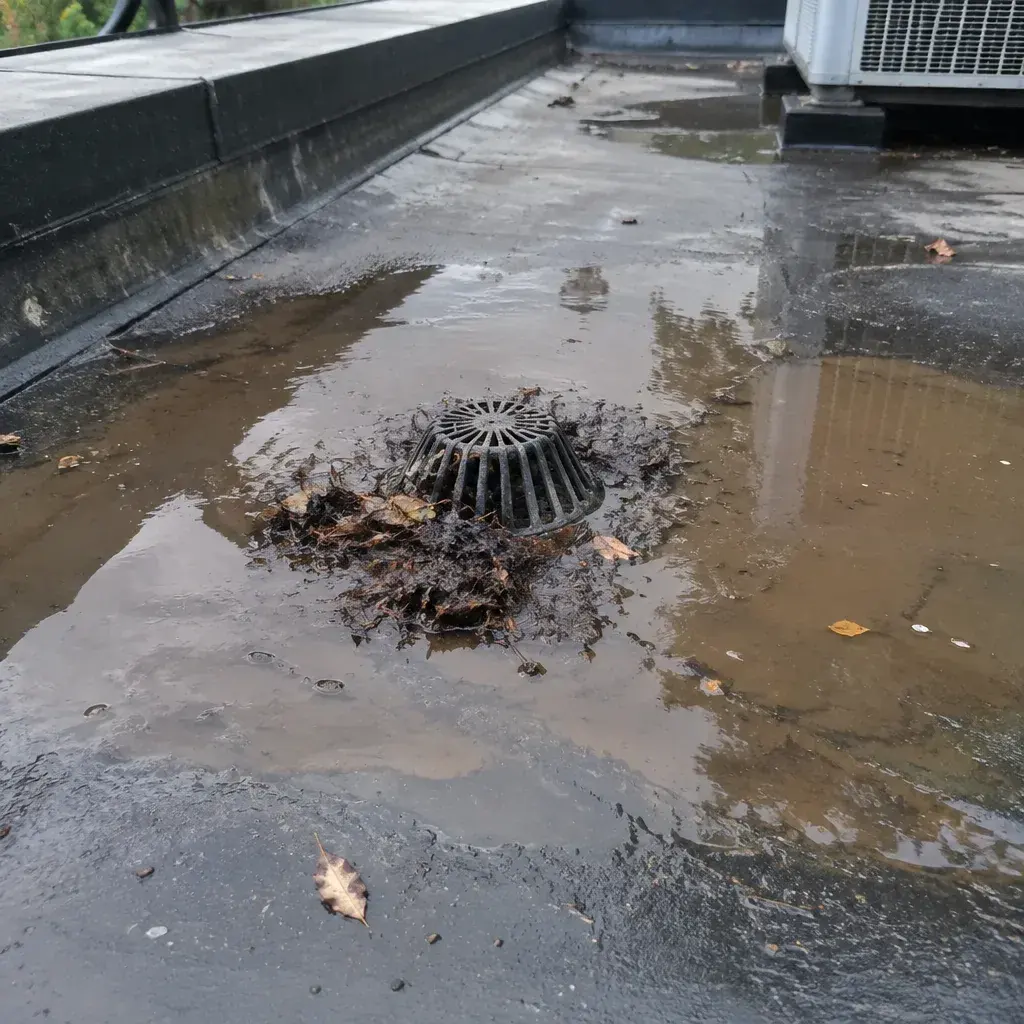
Start with the water evidence you can see, then check the outlet it may point toward. In Gresham, note whether water gathers near a roof drain or scupper during rainy weather. Record any indoor drip or stain, but do not assume it sits below the entry. A drain carries runoff through the roof; a scupper sends it through an opening at the roof edge. The pros we connect you with can compare those signs with the outlet connection and nearby membrane details.
At a drain, follow the connection from the roof surface inward. The membrane must end securely at the drain assembly, with its fastening parts holding the joint in place. Movement, a lifted edge, or a gap can let water slip beneath the surface. For a home near Rockwood Central Park, the same check applies as anywhere in Gresham; the roof’s condition determines the repair. Ask which part has shifted or separated and how the proposed work will restore that joint.
At a scupper, look at how the roof edge channels water through the wall or parapet opening. Its lining and flashing must meet the roof membrane without a break. A seam that has pulled back can admit water around the outlet. In Gresham Rockwood, a property near Ruby Junction Station still needs an assessment of its own roof details. Ask the roofer to identify the failed transition and explain how the repair will close the route around the opening.
Check Scupper Edges and Terminations
Next, check whether debris is restricting the outlet and whether water has left a visible tide mark. These clues can show that runoff has not cleared freely, though they do not prove the outlet joint is leaking. In a house near Johnson Creek, note where water remains after rain and whether the drain or scupper is clear. The roofer can inspect the accessible outlet and connection. Keep the observation focused on that area; a separate roof condition may need separate review.
If the drain connection has loosened, repair may involve securing its fastening assembly and renewing the membrane termination. The materials and method depend on the existing drain design and the condition of the joint. A patch placed beside the outlet may leave the actual connection open. Ask the pros we connect you with to show how the membrane will attach to the drain. For a small commercial roof in Gresham, request the same clear explanation before work begins.
A scupper repair addresses the path where the membrane, flashing, and lined opening meet. The roofer may need to resecure a loose edge or replace a damaged section of lining or flashing. The right detail depends on what has failed at that transition. For a home near the Springwater Trail, have the repair scope name the affected part. That makes it easier to understand whether the work closes the opening’s leak path or addresses another nearby condition.
Match Repair to the Failed Connection
After the connection is repaired, the roofer may direct a controlled flow toward that outlet. This checks whether water still enters around the repaired detail. The test should focus on the drain or scupper connection, with the result explained plainly. Ask what was wetted and whether any water appeared indoors. Testing can help assess the repair, but it cannot establish that every nearby roof area is sound. In Gresham, keep the result tied to the section actually tested.
A sealed outlet may not explain every damp mark if water reached hidden materials before repairs. Wet insulation or damaged decking can retain evidence after the entry point is closed. Ask whether the roofer found concealed damage and whether it changes the scope. A house near Nadaka Nature Park and a small shop near Rockwood Central Park both need findings tied to the inspected roof. Photos can help show which material was visible and what remained concealed.
Check the Repair and Hidden Areas
Before work, ask the roofer to identify the failing connection and the repair boundary. Find out whether the plan concerns a drain fastening, membrane edge, scupper lining, or flashing. Also ask if nearby materials need attention because they affect that joint. This keeps the conversation centered on the outlet leak rather than a broad, unexplained roof proposal. In Gresham, the observed condition and the roof’s construction should guide the repair details.
After work, request photos that show the repaired outlet and its membrane transition. Ask whether the roofer tested the area and what the test showed. If concealed damage was found, have it noted along with any remaining concern. These records help you compare the repair with the original leak evidence. For a property near Main City Park, as elsewhere in Gresham, a clear record should describe the actual connection repaired, not promise that unrelated roof areas were checked.
Seasonal Drain and Scupper Checks
- At a drain, note loose fastening parts, a lifted membrane edge, or debris restricting the outlet.
- At a scupper, check whether lining, flashing, and membrane meet without an open transition.
- Record where water gathers, then ask which outlet connection the repair will restore and whether it will be tested.
- Check how the membrane ends at the drain or scupper; a loose termination can let water behind the edge even when the opening looks clear.
- Look for lifted metal or a split seal where the outlet passes through the wall; movement at this transition can open a path beneath the roof surface.
- Ask what a water test would show and whether damp insulation or decking may remain hidden after the visible connection is repaired.
Roof Leak Repair FAQs
Why does water gather around my roof drain after rain?
A roof drain leak is repaired by restoring the joint between the drain assembly and roof membrane. The roofer checks how the membrane ends at the drain and whether its fastening parts hold securely. Depending on the failed detail, the repair may secure the assembly or renew that termination. The drain design and material condition guide the method. Ask which connection failed and whether the repaired area was tested.
How is a leaking scupper connection repaired?
Scupper leak repair closes the failed transition where the roof membrane meets the lined opening at the roof edge. The roofer checks the lining, flashing, and adjoining membrane edge, then repairs the part that has separated or worn through. The required detail depends on the opening’s condition. Ask for the repair boundary and photos showing how the membrane meets the scupper afterward.
Can a repaired drain still hide water damage?
A roofer may apply controlled water to the repaired drain or scupper connection and watch for continued entry. The test should stay focused on that detail, and the roofer should report what area received water and what happened indoors. A passing check speaks only to the tested section. Hidden wet materials or a separate opening may need additional evaluation.
Have the Connection Checked
Note where water gathers or enters, then ask the pros we connect you with to assess the drain or scupper and adjoining roof materials.
Call (503) 496-7864