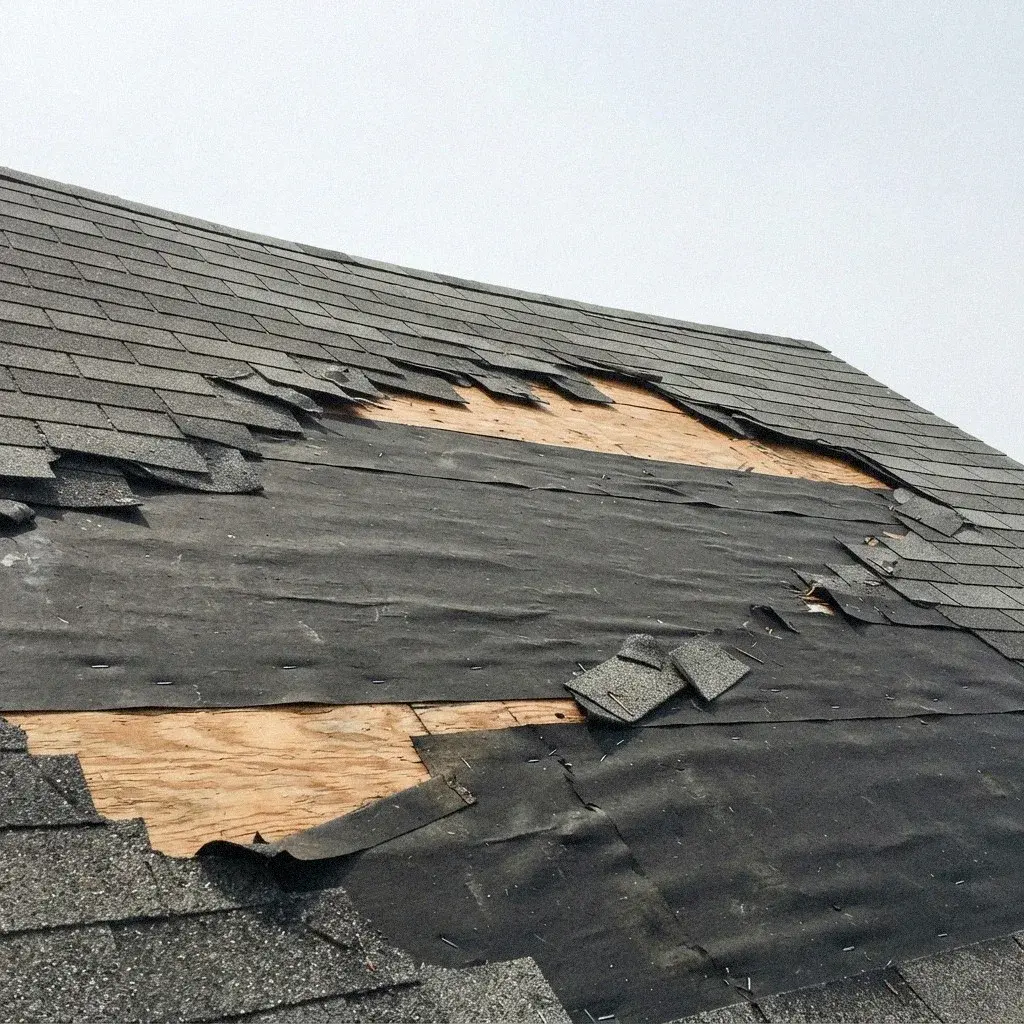
Gresham Roof Leak Repair for Damaged Decking
Learn how damaged decking is assessed, bounded for replacement, and coordinated with repair at the entry point.
Open the roof above the affected area, remove decking that cannot support the covering, and fasten replacement material to sound framing. Repair the roof component admitting water at the same time, then document both areas before closing the assembly.
Assess Decking Before Roof Leak Repair
Start by checking the decking where water has reached it, then connect that damage to the roof opening. Decking carries the roof covering and passes its load to the framing. When moisture weakens a panel, the surface above may lose firm support. In Gresham, the pros we connect you with can compare attic evidence with the exposed roof area. A ceiling mark alone cannot set the repair boundary. The useful record shows where the panel has changed and which roof component needs repair.
Check the panel’s condition before deciding what can stay. Moisture readings can help distinguish damp material from an area that has dried. Look for swelling, soft spots, delamination, or fasteners that no longer hold. In Gresham, attic access may reveal the underside while the roof covering is opened above. A house near Rockwood Market Hall and a small commercial building need the same careful material check. The visible stain does not establish how much decking has lost strength.
Set the boundary where the panel can still hold its connection and carry the roof covering. A discolored area may remain firm, while damage can extend beyond the darkest mark. The pros we connect you with can compare adjacent panel edges and the framing beneath them. In Gresham, the written scope should identify what is retained and what is removed. This gives you a clear basis for checking whether the proposed roof decking repair addresses the affected substrate.
Set the Decking Repair Boundary
The repair has to reach the decking without leaving the water source active. The covering above the affected area is lifted enough to expose the panel and its edges. Then the roof component admitting water is repaired as part of the same scope. That may involve a joint, penetration, valley, or damaged covering, depending on inspection. In Gresham, photos can link the exposed decking to the roof assembly above it. Replacing a panel alone does not stop water entering through an unrepaired opening.
Remove only material that cannot provide dependable support. The cut line should reach decking that remains firm and can connect securely to framing. Panel edges matter because unsupported joints can flex beneath the roof covering. The pros we connect you with should record the planned removal area before replacement begins. For a Gresham property near Rockwood Library, that record helps you compare the visible damage with the work described. The boundary follows the condition of the material, not a preset patch size.
The amount of work depends on what opening the roof assembly requires. A wider area may need to be lifted to reach sound decking and expose the leak source. Access and any affected framing can also change the scope. These details move the cost of a leak inspection and the repair it identifies. Ask which parts are included in the estimate. In Gresham, the pros we connect you with should separate decking replacement from related roof work so you can see each task.
Connect Decking Work With Leak Repair
Fit replacement decking so its edges rest on framing and its fasteners hold securely. The new panel must sit level with the surrounding surface, giving the roof covering steady support. A loose edge can shift under load and strain the assembly above. The pros we connect you with should show how the panel meets the existing deck. In Gresham, that connection matters on homes and small commercial roofs alike. The replacement closes the damaged area while restoring support for the layers above.
Check the framing before closing the roof. If water has affected a rafter or truss, a new panel may not have sound support. Framing carries the roof load beyond the deck, so damage there can change the repair boundary. At a Gresham property near Rockwood Plaza, keep any visible framing concern in the written scope. Do not treat a decking patch as a structural fix when its support is also compromised. The repair plan should account for the condition beneath the panel.
Document the Finished Decking Repair
Keep a record that follows the work from the water entry point to the replacement panel. Before covering the area, photograph the exposed decking, its edges, and the support below. Add a note identifying the roof component repaired at the entry point. This helps you match the completed work to the stated scope. In Gresham, the record can also preserve what was visible before the roof was closed. It gives you a useful reference if the same area needs attention later.
Watch for dampness near lights or outlets, and avoid using fixtures that may have gotten wet. Do not use a ceiling stain as a map for cutting into the roof. Water may reach the room after moving across the assembly. In Gresham, rainy periods can make indoor protection useful while the repair is arranged. A temporary measure may limit further exposure, but the decking and entry source still need inspection. Keep notes on where water appears and when conditions change.
Roof Decking Repair Checks
- Photograph the panel condition and its edges before removal, including any swelling or separated layers.
- Record which framing supports the replacement panel and whether that support appears sound.
- Link the decking work to the roof component repaired at the water entry point.
- Check decking from below for discoloration, sagging, or softened areas; compare those signs with roof-side evidence before setting the repair boundary.
- Confirm replacement material can fasten to sound framing, with panel edges supported and the roof surface ready for rebuilding.
- Specify the roof component letting water in and how its repair will meet the new decking at that location.
Roof Leak Repair FAQs
What signs show that a roof leak weakened the decking?
Check the decking from inside and outside for damp or weakened areas, then assess its supports. In a Gresham house near Johnson Creek, or a small commercial building along Highway 212, photos can show panel edges, nearby framing, and the roof layers above. The written scope should mark which decking comes out, what remains, and how replacement ties into the inspected assembly. That record helps keep concealed damage within clear repair boundaries.
How does a roofer decide where to stop replacing decking?
The removal line depends on whether the panel can still support the roof covering and fasteners. Swelling, softness, separated layers, and weak edges can indicate that material should not remain. Nearby framing also needs to provide solid support for the replacement. A surface stain by itself cannot establish the cut line. Ask to see the marked area and how the proposed boundary relates to sound decking and its supports.
Does the roof entry point get repaired before decking is closed?
Cost changes with the size of the area that must be opened, the amount of decking to replace, and access to the roof. Framing concerns or extra roof work at the water entry point can add scope. Ask for the leak inspection findings and an estimate that separates those tasks. The roof material and conditions at your property determine what work is appropriate; a location alone cannot establish the repair needed.
Review the decking repair scope
Share interior and roof photos with the pros we connect you with, then ask how the proposed work covers damaged decking and its water entry source.
Call (503) 496-7864